
Fillet Knife vs Chef Knife: When the Thin Blade Wins
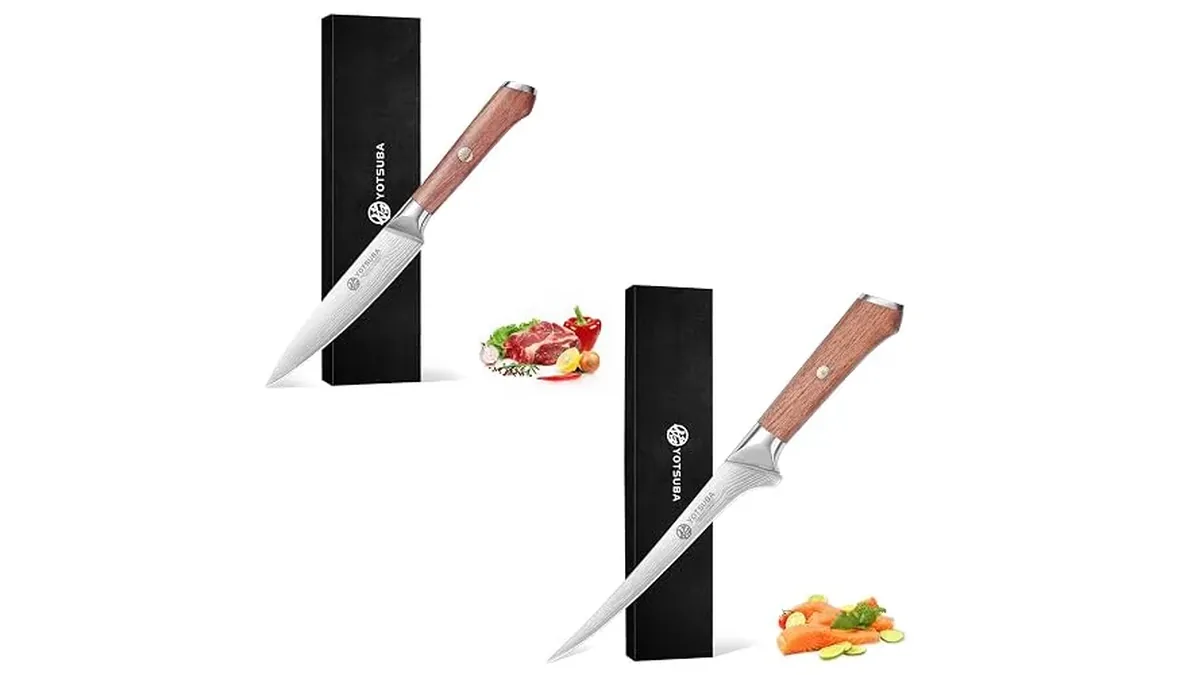
A chef knife is the everyday workhorse for chopping, slicing, and rocker cuts. A fillet knife is a thin, flexible specialist for lifting fish off the bone and skinning fillets. If fish nights are common and you already own a chef knife, the thin blade wins those jobs. If you only own one knife, start with the chef and add fillet later.
Jobs each blade is built for
Swipe sideways to see the whole table →
| Task | Chef knife | Fillet knife |
|---|---|---|
| Onion, carrot, herb chop | Yes | Awkward; flex wanders |
| Breaking down a whole chicken | Possible with care | Not the right stiffness |
| Lifting trout or salmon off the rib cage | Tears more flesh | Yes — flex follows bone |
| Skinning a fillet flat on the board | Clumsy | Yes — blade lies nearly flat |
| Mid-size prep (garlic, citrus, sandwich) | Often oversized at 8 in | Use a 5 in utility instead |
Why flexibility matters on fish
Fish bones sit close to the surface and curve. A flexible blade bends to follow the rib cage and spine, so the edge stays against bone and leaves less flesh behind. When you skin a fillet, the same flex lets the blade lie almost flat against the skin while you pull the skin back. A stiff chef edge fights that geometry: it either digs into flesh or leaves meat on the frame.
Yotsuba's Utility + Fillet Pair pairs a 5 in (127 mm) utility (petty) with a 7 in (178 mm) flexible fillet. Both use rosewood full-tang handles and high-carbon stainless. The utility is rated 56+ HRC; the fillet is HRC 56±2. Edges are hand-honed to about 14° per side. The pair is gift-boxed and aimed at cooks who already own a chef knife and mainly need a small prep blade plus a fish knife.
Why the chef knife still owns the board
An 8 in chef blade has height and stiffness for rocking through dense vegetables, crushing garlic with the flat, and portioning proteins that are not delicate fish. Fillet flexibility is a specialty trait — the product page states it is not ideal for heavy chopping. Reach for the chef (or a santoku) when the job is volume prep, not pin-bone work.
If you need chef + santoku + fillet in one box, compare the 3PCS Set + 7" Fillet. If both blades should stay in everyday prep with no flexible fish knife, compare the Utility + 8" Chef pair.
When the thin blade wins (checklist)
- You fillet whole fish or skin store fillets weekly.
- You already have a chef or santoku for chopping.
- You want a petty for garlic, shallots, and citrus without dragging an 8 in blade through small work.
- You prefer matching rosewood handles across a small duo rather than buying another full block.
Skip a standalone fillet-first purchase if you almost never cook fish, or if your only gap is a chef knife. In that case buy the chef first, then revisit fillet.
How to keep both sharp and safe
Hand-wash and dry both blades after fish or citrus. Store so the flexible fillet tip is not bent in a drawer. Use a board with enough length for a full fillet stroke. Do not pry with the tip; flex is for following bone, not opening jars. Edge angle around 14° per side matches other Yotsuba rosewood knives, so the same honing habits transfer.
Where this pair sits in the range
The Utility + Fillet Pair is the lightest fillet-inclusive option on the site: two knives, no chef, no bread knife. Matching rosewood full-tang handles keep the pair consistent with Milano-family aesthetics. Gift boxing makes it an easier present than a seven-piece or fifteen-piece kit. The two knives are sold as a bundle and may ship separately — worth knowing before a gift deadline.
For steel, hardness, and edge language next to every other Yotsuba kit, read the Yotsuba review. Browse broader chef options under Chef's Knives when the gap is chopping, not fish.
Practical session outline for fish night
- Keep the chef nearby for vegetables and sides.
- Use the 5 in utility for aromatics and garnish.
- Switch to the 7 in fillet only when the fish hits the board.
- Make long, shallow strokes with the blade nearly flat for skinning; let flex hug the frame when lifting meat.
- Wipe the fillet blade between fish if you move from oily to white fish.
That rotation is why the thin blade wins specific minutes of the meal — not the whole night. The chef still carries the rest of prep. Buy the Utility + Fillet Pair when those fish minutes already frustrate you with a stiff blade; keep shopping for a chef when the board work itself is still underserved.