
How to Use the Yotsuba Chef Knife: Grip, Five Cuts and the Handoff
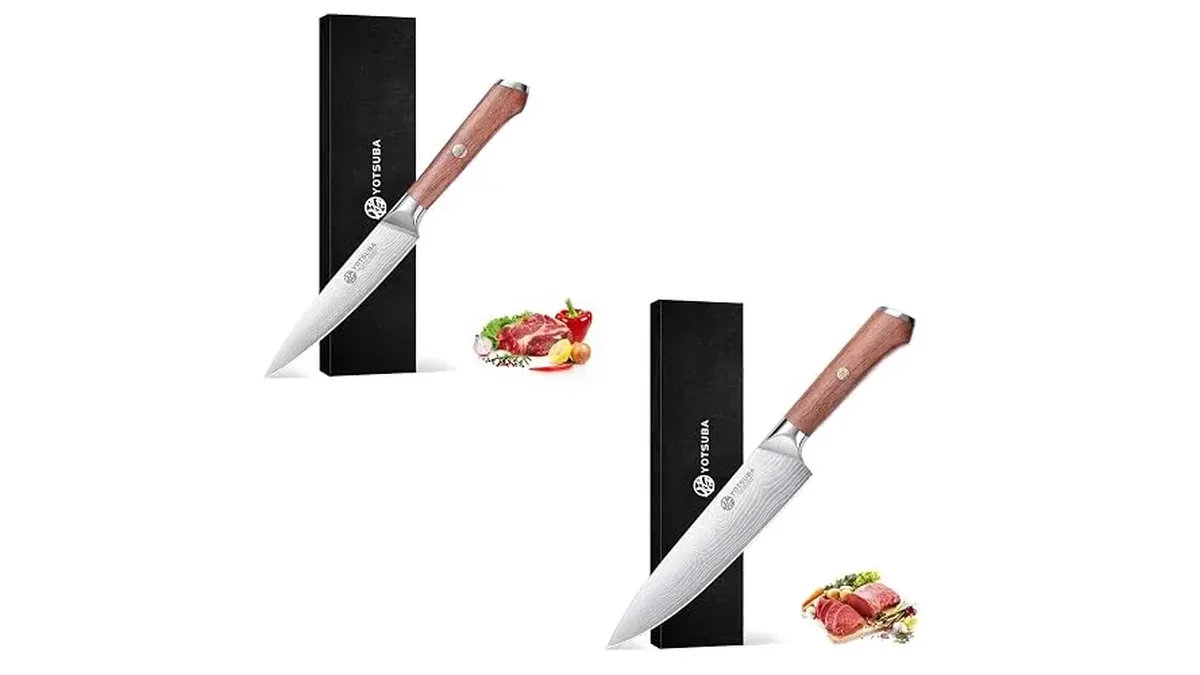
An 8-inch chef knife can handle most of the cutting in a home kitchen. Yotsuba sells its 8" Japanese chef knife with a 5" utility knife as the Utility + 8" Chef Pair. That's a good starting point for learning: one big blade for the board, one small one for everything too fiddly for it.
What Yotsuba says about the pair
- 8" Japanese chef knife with a 2 mm blade and a hand-polished edge.
- 5" utility knife, rated 56+ HRC and hand-sharpened to 14° per side.
- Both have contoured, full-tang rosewood handles.
- The pair comes in gift packaging.
Yotsuba publishes hardness and edge angle for the utility only. It doesn't give either figure for the chef knife.
Start with the grip
Pinch the blade just ahead of the handle between your thumb and the side of your index finger, then wrap your other three fingers around the handle. This pinch grip gives you more control than holding the handle alone, and the contoured rosewood gives your palm something to settle into. On the board, curl the fingertips of your other hand under, knuckles forward, so the flat of the blade rides against your knuckles and not your nails.
Five cuts to learn
1. Rock chop, for herbs and garlic
Keep the tip on the board and rock the heel up and down through the pile. Gather it back together with the spine and go again until it's as fine as you want.
2. Push cut, for onions and peppers
Start with the tip slightly raised and push the knife forward and down in one motion, so it slices rather than crushes. A thin 2 mm blade helps here. It parts an onion instead of wedging it apart.
3. Pull slice, for raw chicken and fish
Set the heel on the far edge of the meat and draw the knife back toward you along its length. Let the blade do the work. Pressing down squashes soft protein.
4. Cross-chop, for dense squash
Grip as usual and rest your guide hand flat on the spine near the tip. Press straight down evenly. This keeps the blade from twisting in hard produce. A fine edge can chip if you lever it sideways.
5. Scrape and transfer
Turn the knife over and use the spine to sweep chopped food across the board. Scraping with the edge dulls it faster than almost anything else you do in the kitchen.
When to switch to the 5" utility
Pick up the utility when the 8" feels clumsy:
- Peeling apples and fresh ginger
- Deveining shrimp
- Coring tomatoes and segmenting citrus
- Trimming a single steak or slicing a sandwich
- Garnishes and small fruit work
Yotsuba names most of these jobs for the utility knife, and its 14° edge is fine enough to get through cherry tomatoes without squashing them.
Keep both edges working
Wash by hand, dry right away, and use a wood or soft plastic board. Keep both blades away from bones and frozen food. When the utility needs sharpening, match its 14° per side. Our guide to Japanese knife sharpening angles explains how. Curious how an 8" chef compares with a santoku or a nakiri? Read gyuto vs santoku vs nakiri.
More everyday chef and utility pairings are on the Chef's Knives page.