
How to Use a Breaking Knife
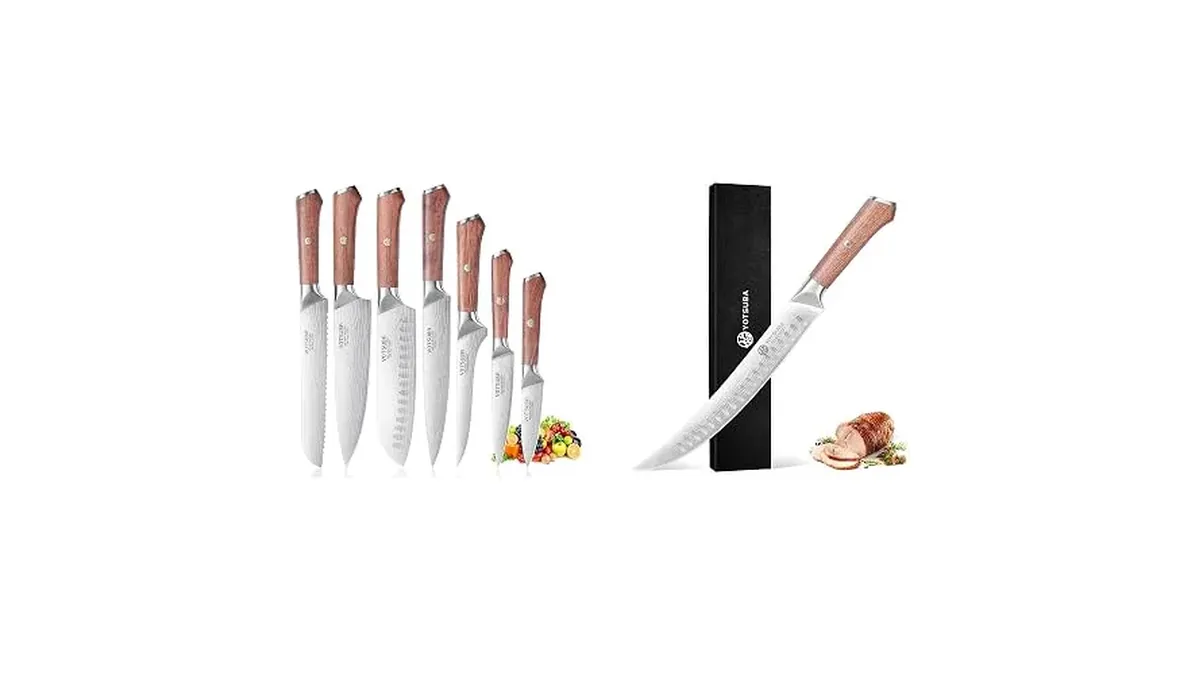
A breaking knife is a long, stiff butcher's blade for cutting big pieces of raw meat into smaller ones. It's the knife you reach for when a whole brisket, a pork loin or a bone-in leg comes home and needs trimming and portioning before it goes near the heat. Yotsuba's 10" breaking knife, sold in the 7PCS + 10" Breaking Knife bundle, is described for brisket, roasts, turkey and ham. This guide covers how to handle one, cut by cut, and how it splits the work with the other knives in that bundle.
Which knife for which job
The bundle puts the breaking knife next to a seven-piece set that includes an 8" boning knife and an 8" chef's knife. Each has its own part of the job.
Swipe sideways to see the whole table →
| Job | Knife | Why |
|---|---|---|
| Trimming the fat cap off a raw brisket | 10" breaking knife | Long, stiff blade covers the whole surface in long strokes |
| Separating a brisket's point from the flat | 10" breaking knife | Follows the fat seam between the two muscles |
| Cutting steaks or chops from a boneless roast or loin | 10" breaking knife | One long stroke per slice gives a flat face |
| Working around a joint or taking meat off the bone | 8" boning knife | Shorter, narrower blade gets into tight spots |
| Dicing meat for a stew or stir-fry | 8" chef's knife | Shorter blade and a flat board stroke |
| Slicing cooked brisket for the plate | A carving knife | A thin blade gives cleaner slices of cooked meat |
How to hold it
Hold the handle with your whole hand, the thumb and index finger pinching the blade just ahead of the handle. The pinch gives you control at the tip, which is where most of the trimming happens. Your other hand flattens the meat or lifts the edge of the fat as you cut. Keep that hand on top of the meat and away from the path of the blade.
Use a large, stable board. Put a damp towel underneath so it can't slide, because long strokes put sideways force on the board.
Trimming a raw brisket
Start with the meat cold from the fridge. Cold fat is firmer and easier to cut cleanly.
Lay the brisket fat side up. Hold the blade nearly flat to the surface and take long, shallow strokes from one end to the other, shaving the fat cap down to an even layer. Lift the trimmed strip with your free hand as you go, so you can see the line you're cutting.
Turn it over and remove the hard fat and the silver skin from the meat side. Slip the tip under the silver skin, angle the edge slightly up toward it, and run the blade along the length, pulling the skin taut with your other hand.
To separate the point from the flat, find the thick seam of fat between the two muscles at the side of the brisket. Work the tip into the seam and follow it with short strokes, pulling the point back as it comes free.
Cutting steaks from a roast or loin
Square off one end first so you have a flat face to measure from. Set the knife at the thickness you want, and cut in one long stroke from heel to tip, letting the length of the blade do the work. Sawing back and forth leaves a ragged face. If the knife won't go through in one stroke, it needs sharpening.
Turkey and ham
A breaking knife takes a raw turkey apart along the joints. Pull a leg away from the body, cut through the skin to expose the joint, and cut through it. The same approach separates the wings. For a bone-in ham, use the breaking knife to cut large sections off the bone. Then switch to the boning knife for meat close to the bone.
Keeping the edge
Yotsuba puts the breaking knife's edge at 14 to 16° per side, slightly wider than the 14° on the rest of the set. Sharpen it within that range, and our guide to what angle to sharpen a Japanese knife shows how. The steel is 5Cr15MoV at about 56 Rockwell, which is easy to bring back with a honing rod between sharpenings.
Yotsuba's care advice for its rosewood knives is to rinse them with warm water and mild soap, dry them completely with a soft towel, and never put them in the dishwasher or leave them soaking. Raw meat leaves fat on the blade, so wash it as soon as you're done. The magnetic gift box is sized for the seven-piece set, so give the breaking knife its own sheath or a spot in a knife block.
Still deciding which long blade you need? Our brisket, breaking or fillet knife checklist walks through all three, and the full range is in BBQ & Carving.